
Fatty alcohol ethoxylate 9 is commonly traded as AEO-9, LAE-9, Laureth-9, or Lauryl Alcohol Ethoxylate 9. These names identify the general grade, but they do not tell a purchasing team whether a shipment will work in an existing detergent or industrial cleaning formula.
Commercial approval usually depends on three practical questions. Does the material meet the agreed specification? Does it perform properly in the complete formulation? Can the supplier maintain comparable quality across repeat shipments?
The SPS Chemical Fatty Alcohol Ethoxylate 9 grade is intended for detergent, emulsifier, and degreaser applications. For bulk buyers, however, the specification is only the starting point. Formula testing, test methods, packaging, quality documents, and total purchasing cost still need attention.
Why AEO-9 Procurement Deserves Attention in 2026
NPE Restrictions Are Prompting More Formula Reviews
Cleaning-product manufacturers serving regulated export markets continue to review nonylphenol ethoxylates in their formulations.
Taiwan will prohibit imports of detergents containing more than 5% nonylphenol or nonylphenol ethoxylates by weight from December 1, 2026. From June 1, 2027, the restriction will extend to concentrations above 0.1% but below 5%, subject to the conditions and exceptions in the official announcement.
EU REACH also restricts nonylphenol ethoxylates at concentrations of 0.1% or more for listed uses including industrial cleaning, domestic cleaning, textile processing, metalworking, cosmetics, and other personal care applications. Certain controlled systems and processing conditions are excluded.
These developments can trigger a review of nonionic surfactant systems, but they do not certify a specific AEO-9 grade or prove that it will replace NP-9 in every formula. EPA released its final NPE alternatives assessment in May 2012, identifying eight safer alternatives to NPEs. This assessment does not constitute approval of any specific commercial AEO-9 grade. Product selection still depends on the intended use and supporting performance data.
Reformulation Still Has to Work in the Finished Product
AEO-9 may be evaluated when a manufacturer changes an existing nonionic surfactant system. A universal one-to-one replacement ratio should not be assumed.
A material that appears clear in water can behave differently after builders, solvents, electrolytes, fragrances, or other surfactants are added. Detergency may change. Foam can rise or break too slowly. The finished product may also become hazy after storage.
That is why the decision belongs in the complete formula, not in a product-name comparison.
AEO-9 Specifications That Matter in Supplier Approval
SPS Chemical AEO-9 has CAS No. 68439-50-9 and is produced through the ethoxylation of natural fatty alcohol with nine moles of ethylene oxide. It is a nonionic surfactant with a liquid or paste appearance at 25°C.
The active content is specified at no less than 99.5%, while water is limited to 0.5%. The color limit is 50 Pt-Co, and the hydroxyl value range is 92–100 mgKOH/g. Its pH specification is 6.0–7.5 in a 1% aqueous solution. That test condition matters: the published pH range does not refer to the undiluted material.
When reviewing a quotation or COA, buyers should compare more than the reported number. The test method, sample concentration, and preparation conditions should also be consistent. Two documents may show similar values while using different procedures.
The broader AEO-3, AEO-7, and AEO-9 guide discusses differences among common fatty alcohol ethoxylate grades. Buyers sourcing several detergent raw materials can also review the SPS Chemical surfactant range.
How to Qualify an AEO-9 Supplier for Commercial Supply
Test the Material Under Real Formulation Conditions
A laboratory trial should resemble production conditions closely enough to expose compatibility problems.
For a detergent, the technical team may examine detergency, clarity, viscosity, foam, rinsing, and stability. In an industrial degreaser, oil removal, residue, emulsion behavior, and performance at the intended working dilution may be more relevant.
Acceptance limits should be defined before testing begins. A candidate sample can be compared with the current formulation and checked again after a specified storage period. A compliant raw-material COA confirms the supplied grade, but it cannot predict every change in the finished cleaner.
Separate Sample Approval from Shipment Approval
Initial supplier qualification normally involves the current specification or TDS, the Safety Data Sheet, a recent sample COA, packaging information, storage guidance, and documents required by the destination market.
After a commercial order is produced, the shipment-specific COA should correspond to the supplied batch. A sample COA used during early evaluation is not a replacement for the quality record attached to the actual shipment.
One successful sample also does not establish long-term consistency. Active content, water, pH, color, hydroxyl value, and appearance should be compared across repeat orders. When a result moves close to an agreed limit, the fatty alcohol ethoxylate supplier should provide the relevant test record and confirm whether the batch remains within specification.
For purchasing teams, this is often more valuable than a small one-time discount. Investigating a borderline batch or repeating a stability trial can cost far more than the initial saving.
Packaging and Total Purchasing Cost
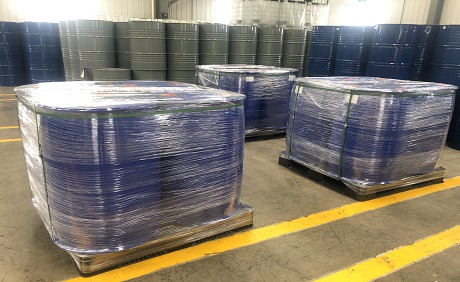
SPS Chemical supplies fatty alcohol ethoxylate 9 in 200 kg drums and IBCs. The suitable choice depends on order size, production frequency, storage space, and the equipment available at the receiving site.
Drums can be practical for trials or smaller production runs. IBCs may reduce unit handling for regular bulk demand, but the plant needs compatible pumps, hose connections, and transfer procedures. Packaging should be reviewed before the purchase order is issued, not after the material arrives.
AEO-9 should remain sealed and be stored in a cool, dry place away from sunlight. Warehouse and production teams should receive these instructions before the first delivery.
The quoted price per metric ton is only one part of the commercial result. The required dosage, laboratory work, production trials, mixing time, handling labor, packaging residue, and rework risk can all change the real cost.
A cheaper offer may still be expensive when it requires a higher use level or additional production adjustments. Procurement and technical teams should therefore review the same cost calculation rather than evaluating price and performance separately.
ESG and Compliance Checks in AEO-9 Procurement
Environmental claims require the same level of control as technical specifications. Terms such as “green,” “sustainable,” or “certified biodegradable” should only be used when supporting records identify the product, test method, and result.
Where a customer requires biodegradability data, feedstock information, restricted-substance declarations, or destination-market documents, these requirements should be raised during supplier qualification. The description “natural fatty alcohol” does not by itself prove renewable certification, supply-chain traceability, or a reduced product carbon footprint.
The Safety Data Sheet should also reach the receiving plant before shipment. This gives the site time to review storage, transfer, and worker-handling procedures.
From a governance perspective, the objective is straightforward: purchasing requirements, test results, and environmental claims should remain traceable to supporting documents. That helps reduce both compliance risk and unsupported green claims.
Preparing a Comparable Bulk AEO-9 RFQ
A useful RFQ should state the required grade and specification, intended application, order quantity, annual demand estimate, packaging preference, destination port, requested Incoterm, target shipment date, and document requirements.
Without the destination and delivery term, quotations from different suppliers may not be commercially comparable. Without the application, the AEO-9 supplier may not know which technical details require discussion.
The SPS Chemical sourcing FAQ covers general quotation factors, MOQ, sample availability, and payment terms. Final conditions depend on the material, packaging, and individual project.
Conclusion
A specification sheet is the first checkpoint in a fatty alcohol ethoxylate 9 purchase, not the final approval. Buyers still need to confirm performance in the complete formula, verify test conditions, review batch documents, and calculate the cost created by packaging and plant handling.
SPS Chemical is the brand of Henan Springsea Chemical Products Co., Ltd., a company founded in 2016 that specializes in the R&D, production, and sales of surfactants for bulk B2B supply. Share the required specification, application, quantity, packaging, destination, and shipment schedule through the SPS Chemical contact page to request a project-based AEO-9 quotation.
FAQ
Q1: What is AEO-9 used for in detergent and industrial cleaning formulations?
A: AEO-9 is used in detergent, emulsifier, and degreaser systems. Its dosage and finished-product performance should be confirmed in the complete formulation.
Q2: Is AEO-9 the same as LAE-9 or Laureth-9?
A: These names are associated with fatty alcohol ethoxylate 9. Because naming conventions can vary between suppliers, buyers should still confirm the CAS number and specification.
Q3: Can fatty alcohol ethoxylate 9 directly replace NP-9?
A: A universal one-to-one replacement should not be assumed. Detergency, foam, emulsion stability, rinsing, appearance, and storage performance require formulation testing.
Q4: What should buyers review when choosing an AEO-9 supplier?
A: Review the agreed specification and test conditions, followed by the SDS, sample COA, shipment-specific COA, packaging information, storage guidance, and repeat-order results.
Q5: What information is needed for a bulk AEO-9 quotation?
A: State the required grade, application, quantity, annual demand estimate, packaging, destination port, Incoterm, shipment date, document requirements, and sample needs.