
Most Povidone K30 purchasing problems begin before the purchase order is issued. The inquiry may be too broad, the approved sample may come from a different source than the commercial lot, or the COA may not match the buyer’s release criteria. Any of these gaps can add laboratory work, delay approval, and make a low quotation more expensive than it first appeared.
Before selecting a Povidone K30 supplier, procurement and QA teams need to settle the application, grade, critical specifications, source, packing, and document scope. Only then does a price comparison become useful. This guide is written for formulation teams, importers, distributors, and industrial buyers evaluating Polyvinylpyrrolidone K30 for trial or bulk supply.
Start With the Application, Not the Product Name
“PVP” is not a complete purchasing description. K25, K30, K60, and K90 belong to the same polymer family, but they are separate grades. Before samples are requested, the buyer needs to establish the intended use, required standard, and limits that could stop the material from being released. That early work prevents the technical team from testing one grade while purchasing negotiates another.
Avoid Grade Mismatch Before Sample Approval
For the PVP K30 grade supplied through SPS Chemical, the K-value range is 27.0 to 32.4. Povidone, Polyvinylpyrrolidone, and PVP are accepted naming variations, and the CAS number is 9003-39-8. The quotation, sample label, specification, COA, and purchase order should all point clearly to the same K30 grade. A missing grade reference can create an avoidable question during QA review.
SPS Chemical lists PVP for pharmaceutical excipient, cosmetic and personal-care, and industrial applications. The inquiry should include the intended application, target specification, critical limits, trial quantity, and destination. Pharmaceutical buyers should also name the required compendial basis. “Povidone” is a pharmacopoeial name, but the name alone does not confirm compliance with every pharmacopoeial monograph.
Clearing up these points before sampling saves both sides from testing one material and discussing another for the commercial order. It also gives the supplier enough information to prepare documents that match the buyer’s actual approval route.
Treat a New Source as a Technical Change
Two Polyvinylpyrrolidone K30 offers may carry the same CAS number but come from different manufacturing sources. Their test methods, document formats, packaging, or change-notification practices may not be identical.
A new offer should be checked against the approved material for grade identity, K-value range, critical impurities, manufacturing source, packaging, and sample performance. The commercial shipment should then follow the same source reviewed during approval. Otherwise, the laboratory can approve one sample while the order is later fulfilled through another supply route.
This does not mean that every source change requires the same level of testing. The decision should reflect the application, internal change-control procedure, specification differences, and risk attached to the finished product.
Focus on the Specifications That Change the Buying Decision
More test items do not automatically make a specification better. Some values confirm the grade; others matter only because of the formulation, customer standard, or target market. Procurement, QA, and technical teams should agree on those priorities before comparing quotations.
This helps avoid two common mistakes: accepting weak controls because the price is low, or demanding limits that raise cost and reduce supply options without improving the final result.
Read the Specification and COA Together
The specification defines the acceptable range, while the Povidone K30 COA reports the result for one batch. Both documents should use consistent product identification and contain enough information for incoming review.
| Decision Point | Specification Limit | Buyer Check |
| K-value | 27.0 to 32.4 | Keep the sample and commercial batch within the approved K30 range |
| Peroxides | ≤400 ppm | Decide whether the project needs a tighter internal target |
| NVP | ≤10 ppm | Compare the batch result with the approved residual-monomer limit |
| Water | ≤5.0% | Set suitable sampling, resealing, and storage controls |
| 2-Pyrrolidone | ≤3.0% | Review batch results when qualifying or changing a source |
Other published controls include hydrazine, heavy metals, aldehydes, formic acid, sulfated ash, nitrogen, and pH. These parameters should enter the technical review when they are relevant to the customer’s release standard, rather than being copied into a purchasing requirement without a clear reason.
Document alignment matters as much as the numbers. If the quotation says PVP K30, the sample label says only Povidone, and the COA does not identify the grade clearly, QA may pause the review until the supplier links those documents to the same material.
Use Tighter Limits Only When the Project Supports Them
A tighter internal limit can reduce risk when stability work, customer requirements, or earlier deviations justify it. Peroxide control, for example, may deserve closer attention in a formulation containing oxidation-sensitive components. In a less sensitive application, the same target may simply narrow the available source base.
Special limits can affect testing, approval time, batch availability, PVP K30 price, and long-term sourcing flexibility. The technical team should separate critical parameters from routine or informational checks. Procurement can then compare offers against actual project needs rather than selecting the strictest-looking specification.
This distinction also improves communication with the supplier. When a buyer requests a special limit, the supplier can confirm whether it belongs to the standard grade, needs additional testing, or changes the quotation.
Compare the Full Cost of a Bulk Povidone K30 Order
Unit price is easy to see. Sample freight, testing, document review, import charges, warehouse handling, and approval time are not. A low-priced offer can lose its advantage when the paperwork is incomplete, the source differs from the approved sample, or the packing creates extra work at the destination.
A fair comparison therefore needs the same technical and commercial basis across every offer.

Put Every Quotation on the Same Basis
Each quotation should cover the same quantity, source, specification, packing, Incoterm, destination, payment terms, document scope, and lead time. An offer based on a different source or shipment format cannot be compared directly with one built around the buyer’s approved conditions.
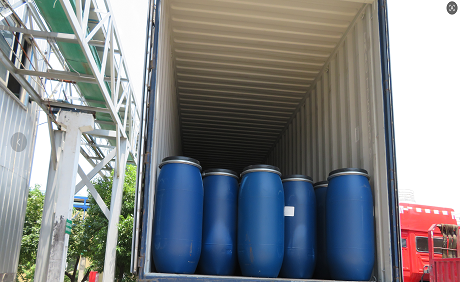
SPS Chemical lists PVP in 25 kg plastic or fiber drums with inner PE bags, with storage in a dry place at room temperature. Because the material is hygroscopic, opened liners need prompt resealing, and partly used drums should remain linked to the original batch number. These details affect warehouse control, pallet planning, freight, and routine sampling.
MOQ and sample terms should be confirmed for the specific Povidone K30 inquiry. SPS Chemical states that minimum quantities vary by raw material and packaging, and that free samples may be available for selected specialty chemical projects. These terms should be checked before the buyer builds a testing schedule or landed-cost calculation.
Keep Sample Approval Connected to Commercial Supply
A practical first-order process covers grade confirmation, document review, representative sample testing, packing approval, and commercial ordering. There is no universal approval time because sample transit, laboratory workload, QA questions, and document revisions vary from one buyer to another.
The key issue is continuity. The sample, specification, source, and commercial offer should remain connected throughout the process. If one of them changes, the buyer needs enough notice to decide whether another review is required.
This is where a small detail can become a large problem. A sample may pass laboratory testing, yet the order can still be delayed when the commercial quotation introduces a different source, drum type, or document basis.
Evaluate the Supplier Behind the Quotation
A Povidone K30 supplier is not evaluated only on the material in the drum. Buyers also need to know who controls the source, who issues the documents, and how future changes will be communicated.
The 2026 update to the IPEC Qualification of Excipients Guide keeps supplier-user communication and secure supply-chain qualification in focus. For pharmaceutical buyers, product identity, source responsibility, document control, and change handling should be settled before routine orders begin.
Check Source Responsibility and Document Control
QA will normally begin with the current specification, a representative or batch-specific COA, SDS, packing information, storage conditions, and manufacturing-source details where required. Pharmaceutical projects may also ask for the original manufacturing site, applicable compendial basis, retest information, or a change-notification process.
Source transparency is especially important when purchasing through a distributor. It tells the customer whether additional manufacturer documents, audits, or internal approvals are needed. The supplier should also explain how changes in manufacturing site, specification, test method, or supply route will be communicated.
SPS Chemical is the brand of Henan Springsea Chemical Products Co., Ltd. The company’s manufacturing activity focuses on surfactants, while PVP K30 is supplied through its specialty chemical portfolio. Buyers that require original-source details should include that request in the qualification checklist from the beginning.
Send an Inquiry That Can Move Toward a Purchase Order
A request for the “best price” usually creates another round of emails. An accurate offer depends on the grade, application, quantity, destination, target specification, required documents, packing preference, Incoterm, and expected order date.
Providing those details allows SPS Chemical to check the available specification, sample terms, Povidone K30 MOQ, packing, lead time, and commercial offer without guessing at the project. It also gives the buyer a quotation that can move into technical and commercial review instead of waiting for missing information.
Conclusion
A sound Polyvinylpyrrolidone K30 purchase follows a clear path: confirm that K30 fits the application, define the limits that matter, approve a representative sample, verify the source, and compare total landed cost. The lowest quotation is not always the lowest-risk order, and the tightest specification is not automatically the best commercial choice.
For a PVP K30 trial or bulk order, send SPS Chemical the application, quantity, destination, target specification, packing request, and document checklist. Henan Springsea Chemical Products Co., Ltd. can then confirm current sample availability, product-specific MOQ, lead time, and quotation for review.
FAQ
Q1: How can a buyer check whether Povidone K30 suits a specific application?
A: Start with the required grade, target standard, and critical release limits. Then test a representative sample from the intended commercial source under laboratory or pilot conditions that reflect the planned process.
Q2: Can Povidone K30 from a new supplier replace an approved grade directly?
A: Not automatically. Compare the specification, COA, K-value range, manufacturing source, packaging, and sample performance before deciding whether requalification or formal change control is needed.
Q3: Which items should be checked on a Povidone K30 COA?
A: Check the product and grade name, batch number, specification limits, batch results, test date, and source information where required. The COA should match the specification used during sample approval.
Q4: What usually delays PVP K30 sample approval?
A: Common delays include missing source information, inconsistent grade names, incomplete documents, specification differences, sample transit, and internal laboratory scheduling.
Q5: What information is needed for a bulk Povidone K30 quotation?
A: Provide the grade, application, quantity, destination, target specification, required documents, packing preference, Incoterm, and expected order date. This gives the Povidone K30 supplier enough information to prepare an offer for technical and commercial review.