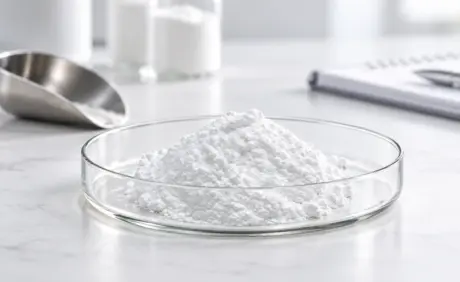

Three quotations can all state “Creatine Monohydrate 99.5%” and still represent different purchasing requirements. The price difference may come from particle size, density basis, impurity limits, test methods, packing, or simply from how clearly the material has been defined before quotation.
For procurement teams comparing Creatine Monohydrate Manufacturers and suppliers, this is where the real evaluation begins. Price only becomes useful once the technical basis is aligned.
SPS Chemical, the brand operated by Henan Springsea Chemical Products Co., Ltd., supplies Creatine Monohydrate for medicine raw-material and health-additive use. This article focuses on the points that help buyers compare offers more accurately and prepare a cleaner RFQ.
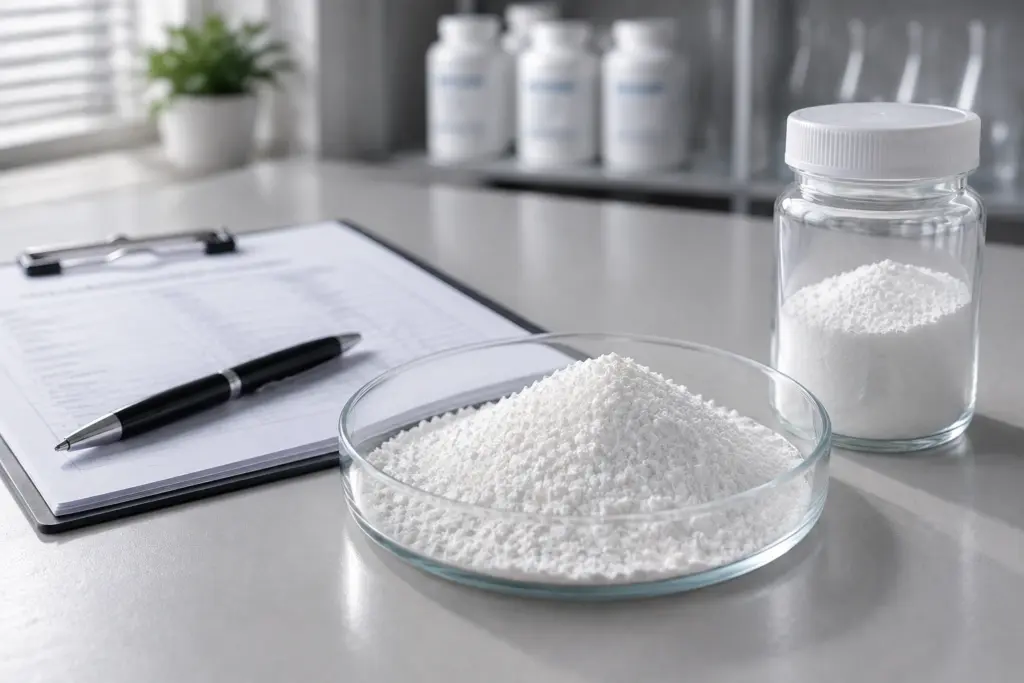
Why a 99.5% Assay Does Not Make Two Offers Equivalent
Purity is often the first figure buyers see, but it is only one part of a purchase specification. Two offers can carry the same assay while differing in particle-size requirements, bulk density, impurity limits, or testing basis.
That difference becomes important once quotations move from initial sourcing into technical review. A price sheet may look comparable at first, but the figures only mean something when each supplier is quoting against the same material requirements.
Product identity and assay method come first
The creatine monohydrate supplied by SPS Chemical is CAS No. 6020-87-7, with an assay of ≥99.5% by HPLC.
That gives buyers a clear starting point: product identity, assay level, and test method. If another offer states only “99.5% purity” without indicating the test basis, the quotation may still be valid, but it needs clarification before a direct comparison is made.
Price makes more sense after the grade is aligned
A lower quotation is not automatically a weaker offer, and a higher quotation is not automatically a better one. The key question is whether both suppliers are pricing the same technical requirement.
The cleanest approach is to send the same purchase specification to every shortlisted source. If that is not possible, procurement can compare the critical parameters first and treat early pricing as provisional until the material basis is clear.
Technical Criteria That Separate One Creatine Monohydrate Offer from Another
Once product identity and assay are aligned, physical properties and impurity limits usually provide the next level of comparison. This is where apparently similar offers can begin to differ.
For B2B sourcing, the goal is not to collect every possible laboratory figure. The more useful approach is to focus on the parameters that affect supplier qualification, technical approval, and purchasing decisions.
200 mesh and bulk density describe different properties
The creatine monohydrate supplied by SPS Chemical is specified at 200 mesh, with bulk density of ≥430 g/L.
These two figures describe different characteristics. Mesh size relates to particle-size classification. Bulk density describes how much powder mass occupies a given bulk volume.
This matters when comparing Creatine Monohydrate Manufacturers. One company may state “200 mesh,” another may use only “fine powder,” while a third may provide a density figure without naming the type of density. Those offers are not directly comparable until the terminology is clarified.
The same applies to the search term creatine density. For purchasing purposes, the relevant question is not simply “What is the density of creatine?” but which density measurement appears in the quotation or technical specification.
Impurity limits add context to the 99.5% claim
For this supplied grade, creatinine is limited to ≤100 ppm and dicyanamide to ≤50 ppm, both by HPLC.
These values help define what sits behind the headline assay. If two suppliers both offer 99.5% creatine monohydrate but use different impurity limits, the products may not meet the same purchase specification.
That distinction is particularly useful during supplier screening because it moves the discussion beyond a single purity figure and into measurable quality criteria.
Quality Criteria in Creatine Monohydrate Supplier Qualification
After assay, particle size, bulk density, and key impurity limits have been aligned, the review can move to the quality criteria that matter during approval and incoming inspection.
At this point, procurement and QC are no longer asking whether the product name looks right. They are checking whether the offered material fits the buyer’s own acceptance standard and whether the supplier can respond clearly to technical requirements.
Heavy-metal and microbiological controls belong in technical review
The creatine monohydrate supplied through SPS Chemical includes a total heavy-metals limit, along with separate limits for arsenic, cadmium, mercury, and lead. Microbiological criteria cover total plate count, yeast and mold, Coliform, E. coli and Salmonella, and Staphylococcus aureus.
These controls are relevant during supplier qualification, but the buyer’s own purchase specification remains the working reference. If internal or destination-market limits are tighter, those requirements need to be stated before the commercial offer is finalized.
Consistency matters beyond the first quotation
A technically acceptable first offer is only one stage of the buying process. The same product identity, assay basis, physical requirements, and quality criteria need to remain consistent from quotation through approval and purchase.
For repeat sourcing, batch consistency becomes part of the broader supplier evaluation. Technical documentation, specification control, and clear communication all help procurement confirm that the material being discussed is the material being ordered.
Evaluating Creatine Monohydrate Manufacturers and Suppliers for B2B Supply
Search results for Creatine Monohydrate Manufacturers often include factories, exporters, distributors, and specialty-chemical suppliers. Company type matters, but it is not the only qualification factor.
For international buyers, supply capability also includes technical communication, specification matching, commercial coordination, and the ability to support the order from quotation through shipment.
Supply Capability Matters Beyond the Manufacturer Label
Henan Springsea Chemical Products Co., Ltd. combines its manufacturing experience in surfactants with a broader specialty chemical sourcing and supply network. Under the SPS Chemical brand, the company supports international buyers across a wider range of chemical raw materials, including creatine monohydrate.
For procurement teams comparing Creatine Monohydrate Manufacturers and suppliers, supplier qualification also depends on specification matching, technical communication, packing coordination, and commercial support. Keeping these requirements aligned from the initial inquiry through order confirmation makes quotations easier to compare and reduces unnecessary back-and-forth during the purchasing process.
A supplier shortlist needs more than price
When several Creatine Monohydrate Manufacturers and suppliers are under review, a useful shortlist looks at both the material and the supply process.
Typical evaluation points include:
- specification matching;
- technical communication;
- product consistency;
- packing suitability;
- destination requirements; and
- commercial coordination.
A low bulk creatine monohydrate price can be attractive, but it only becomes meaningful once those points are aligned.
SPS Chemical supplies creatine monohydrate within its food ingredients range. The product is available in standard 25 kg carton packing and is stored in a cool, dry place protected from light.
Preparing an RFQ for Bulk Creatine Monohydrate
A strong RFQ does not need to be long. It needs to give the supplier enough information to quote the correct material on the correct commercial basis.
For bulk creatine monohydrate, quantity, destination, target specification, and packing all influence the quotation. Providing those details at the beginning reduces unnecessary clarification and makes it easier to compare offers from different suppliers.
Include the details that affect the quotation
A first inquiry normally includes:
- required quantity;
- destination country or port;
- target specification or internal purchase specification;
- packing requirement; and
- any project-specific quality criteria.
SPS Chemical provides sourcing assistance and product consultation, so sending a complete specification with the inquiry gives both sides a clearer basis for technical and commercial review.
Keep early pricing in context
An indicative price can be useful for budgeting, but it is not a final supplier comparison if the grade, packing, or destination is still open.
For procurement teams reviewing several Creatine Monohydrate Manufacturers or suppliers, the most reliable sequence is straightforward: define the material, confirm technical equivalence, then compare commercial terms.
Conclusion
Creatine monohydrate sourcing becomes more reliable when every quotation is built on the same purchasing basis.
A 99.5% assay is important, but it is only one part of the comparison. Particle size, bulk density, impurity limits, quality criteria, packing, and destination requirements all affect whether two offers are genuinely equivalent.
SPS Chemical, operated by Henan Springsea Chemical Products Co., Ltd., supplies creatine monohydrate for B2B customers. Buyers can contact SPS Chemical with the required quantity, destination, and target specification to discuss supply and quotation details.
FAQ
Q1: How do I compare Creatine Monohydrate Manufacturers offering the same 99.5% assay?
A: Compare the assay method, particle-size requirement, bulk-density basis, key impurity limits, quality criteria, packing, and commercial conditions. The same purity figure does not automatically mean the same purchasing specification.
Q2: Is creatine density the same as creatine monohydrate bulk density?
A: Not necessarily. “Creatine density” is a broad term. For the creatine monohydrate supplied by SPS Chemical, the specified value is bulk density ≥430 g/L. Figures from different suppliers need to use the same measurement basis before they are compared.
Q3: What information do creatine monohydrate suppliers need to prepare a bulk quotation?
A: Quantity, destination, target specification, packing requirement, and any project-specific quality criteria provide a practical basis for quotation. An existing purchase specification makes technical comparison easier.
Q4: Is 200 mesh enough to compare two creatine monohydrate grades?
A: No. Mesh size covers particle-size classification only. Assay basis, bulk density, impurity limits, quality criteria, and other purchasing requirements still need separate review.