
SLES 70% is quoted case by case. Order volume, packaging, destination, payment terms, and the selected Incoterm can all change the final number. That is why the lowest quotation is not always the best buy.
A buyer searching for an SLES 70 price per ton may receive offers that look similar but cover different delivery terms, packaging, or active-matter ranges. For procurement teams, the target is practical: an approved Sodium Lauryl Ether Sulfate 70% specification at a competitive total landed cost.
Start with the Exact SLES 70% Requirement
Confirm the Grade Before Comparing Prices
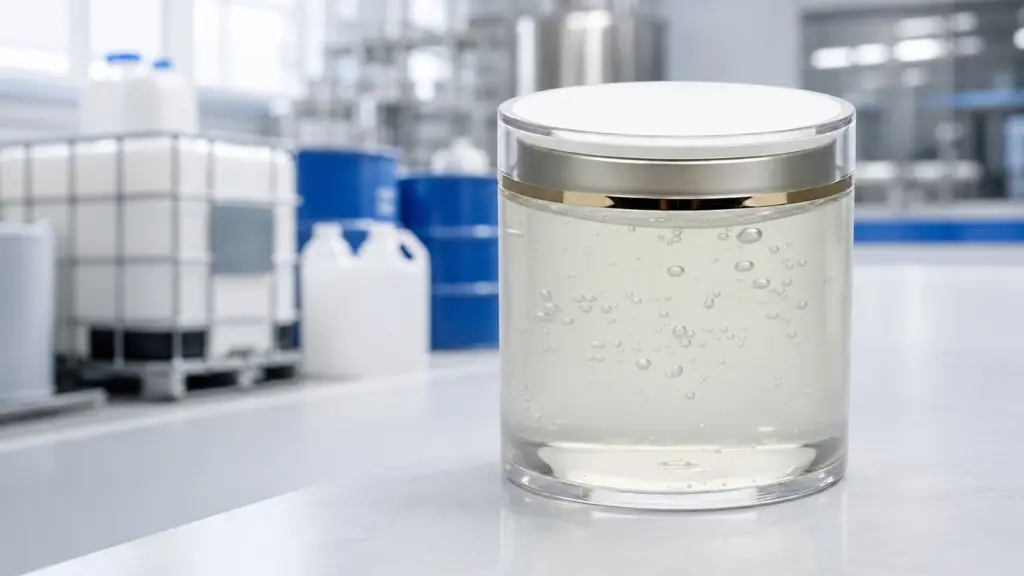
SPS Chemical supplies SLES 70% as a white or light-yellow viscous paste at 25°C. The specification sets active matter at 70±2%, unsulfated matter at a maximum of 3.5%, and sodium sulfate at a maximum of 2.0%. The pH range is 6.5–9.5 in a 1% active-matter solution, while color is limited to 20 Klett in a 5% active-matter aqueous solution.
These values belong in the purchasing specification. Active matter affects dosing economics, while impurities, pH, and color may affect production acceptance or finished-product consistency.
Before discussing price, buyers should confirm:
- Product grade and active-matter range
- Appearance, pH, color, and impurity limits
- Required technical and safety documents
- Whether approval is based on a sample, specification, or batch result
For broader product background, SPS Chemical also provides an article on SLES chemistry and industrial applications. This guide stays focused on procurement cost.
Align Supplier Quotations on One Commercial Basis
Check What Is Behind the Quoted Number
A useful quotation should state the currency, net quantity, packaging, validity period, payment terms, shipment point, destination, and Incoterm.
Quote validity matters. A price held for seven days is not commercially equal to one valid for thirty. Payment terms also affect the deal; a slightly lower price may require full advance payment, while another offer may provide more workable terms for recurring purchases.
Compare the Same Incoterm and Named Place
An FOB offer should not be compared directly with a CIF offer. Buyers can ask all SLES suppliers to quote on one basis or add the missing costs until every offer reaches the same delivery point.
The named port or delivery place must be clear. Procurement should also confirm which party is responsible for freight, insurance, import duty, customs clearance, terminal handling, and inland delivery. The goal is simple: identify where the seller’s quoted cost stops and where the buyer’s additional cost begins.
What Affects the SLES 70% Price in 2026?
Raw Materials, Quantity, and Supply Conditions
There is no fixed international price for every SLES order. SPS Chemical prepares quotations according to raw-material costs, order quantity, and current bulk chemical supply conditions.
Trial and recurring orders may receive different commercial terms. SPS Chemical also states that MOQ varies by material and packaging specification, while free samples are available for selected products based on project requirements. Buyers can review the company’s chemical sourcing FAQ before sending an inquiry.
“Please send your best price” usually starts another round of questions. A useful RFQ gives the supplier something concrete to price.
Freight and Destination Costs
Freight does not change the product. It can completely change which offer is cheaper.
Insurance, terminal handling, customs clearance, and inland trucking vary by destination and shipment period. Keep these items separate from the product price until procurement can see who pays each charge.
Market conditions explain why quotations move, but they do not show which offer is better. For that, buyers need to compare the usable active content behind each quoted ton.
Compare Cost on an Active-Matter Basis
Use this calculation:
Cost per active metric ton = quoted cost per metric ton ÷ active-matter fraction
The example below uses a hypothetical quotation of $1,000 per metric ton. It is not a current commercial offer from SPS Chemical.
| Active Matter | Cost per Active Metric Ton |
| 68% | $1,470.59 |
| 70% | $1,428.57 |
| 72% | $1,388.89 |
This shows why the gross SLES 70% price per ton does not tell the whole story. Two offers can change rank after conversion to cost per active ton.
For initial budgeting, buyers commonly use the nominal 70% value. Commercial settlement and batch acceptance should still follow the contracted specification, agreed test method, and applicable batch result.
A favorable active-matter calculation does not offset unacceptable pH, color, impurities, or inconsistent quality. The calculation supports commercial comparison; it does not replace technical approval.
For additional performance and sourcing context, see SPS Chemical’s industrial sourcing guide for SLES 70%.
Build the Total SLES 70% Landed Cost
Costs Before Arrival
Depending on the agreed trade term, pre-arrival costs may include:
- Product and packaging
- Export handling
- International freight
- Cargo insurance
- Shipping and banking documents
Mark each item as included, excluded, or awaiting confirmation. This prevents the same charge from being counted twice—or missed completely.
Destination and Plant-Side Costs
After arrival, the buyer may still need to pay:
- Import duty and taxes
- Customs-clearance fees
- Port or terminal handling
- Container or equipment charges
- Inland delivery
- Warehousing and unloading
- Bank and payment costs
| Comparison Item | Supplier A | Supplier B | Buyer Check |
| Product price | Same grade and net weight? | ||
| Packaging | Included in the price? | ||
| Freight and insurance | Same route and shipment period? | ||
| Destination charges | Confirmed locally? | ||
| Total landed cost | Compared per active ton? |
It is a simple sheet, but it often catches hidden charges before the PO goes out.
Select Packaging for the Receiving Plant
Compare Handling, Residue, and Storage
SPS Chemical lists 170 kg drums, 220 kg drums, Flexibags, and IBCs for SLES 70%. There is no universal best package.
Drums may suit smaller material movements or facilities with basic handling systems. IBCs can reduce individual handling where compatible equipment is available. Flexibags may fit larger shipments, but the plant needs a workable unloading plan.
A Flexibag offer may look cheaper on paper. Without suitable discharge equipment, however, labor, residue recovery, and internal transfer can erase the saving.
Packaging should be reviewed against:
- Available unloading equipment
- Labor and discharge time
- Residual product after emptying
- Warehouse space and internal movement
- Disposal requirements
- Normal production batch size
SPS Chemical specifies cool, well-ventilated storage, tightly closed containers, separation from heat, flame, oxidants, and food, and a storage temperature no higher than 60°C. The published storage duration is two years.
Compare SLES Suppliers with a Consistent Scorecard
Technical Qualification
Buyers comparing sodium lauryl ether sulfate 70 suppliers should apply the same technical standard to each offer. Review active matter, unsulfated matter, sodium sulfate, pH, color, appearance, and the documents required by the receiving company.
A typical qualification package may include:
- Current product specification or TDS
- Safety Data Sheet
- Recent sample COA for supplier qualification
- Batch-specific COA for the actual shipment
- Packaging information
- Any market-specific documents requested before purchase
The TDS describes the standard product profile. The SDS supports handling and storage review. A recent sample COA may help with initial qualification, while the batch-specific COA should report results for the supplied lot.
Commercial Comparison
The commercial scorecard should include:
- Unit price and currency
- MOQ
- Packaging
- Payment terms
- Quotation validity
- Planned dispatch date
- Incoterm and named destination
- Total landed cost
Claims such as “stable quality” or “fast delivery” are not enough on their own. Procurement needs a defined specification, usable documents, clear commercial terms, and a shipment plan that fits the required date.
What to Include in an RFQ for SLES 70% Manufacturers
A clear RFQ helps SLES 70% manufacturers return a useful quotation without several rounds of basic questions.
Include:
- Required SLES 70% specification
- Trial, one-time, or recurring quantity
- Preferred packaging
- Destination port or delivery point
- Requested Incoterm
- Target shipment date
- Payment preference
- Required qualification documents
For repeat purchasing, add estimated annual demand and order frequency.
This gives every supplier the same commercial picture. Without a standard RFQ, one supplier may quote drums on FOB terms while another quotes an IBC shipment with freight included. Both offers may be valid, but they are not ready for direct comparison.
Common Quote-Comparison Errors
The most frequent mistakes are not complicated:
- Comparing different concentrations
- Comparing gross weight with net product weight
- Mixing quotations based on different Incoterms
- Ignoring quotation expiry dates
- Leaving out destination charges
- Choosing solely on unit price
- Assuming every packaging format works at the plant
Procurement should reconfirm older offers before final approval. Changes in raw-material or bulk supply conditions may make an earlier quotation unavailable.
Conclusion
A sound buying decision starts with the same specification and ends with one practical number: what the material costs when it reaches the plant and can be used.
The lowest SLES 70% price may not remain the lowest after active matter, packaging, freight, import charges, payment terms, and handling are included. A consistent RFQ and landed-cost sheet give procurement a cleaner comparison.
SPS Chemical, operated by Henan Springsea Chemical Products Co.,Ltd., supplies surfactants for bulk B2B purchasing. Share your volume, preferred packaging, destination port, requested trade term, and target shipment date through the SPS Chemical contact page to request a project-specific SLES 70% quotation.
FAQs
Q1: What is the current SLES 70% price per ton?
A: SLES 70% is quoted case by case. The price depends on raw-material costs, quantity, packaging, destination, Incoterm, payment terms, and current bulk supply conditions.
Q2: How should buyers compare SLES 70% supplier quotes?
A: Confirm the same specification, concentration, and net quantity. Then compare cost per net ton, cost per active ton, packaging, payment terms, quotation validity, Incoterm, and total landed cost.
Q3: What costs are included in the landed cost of SLES 70%?
A: Landed cost may include product, packaging, freight, insurance, import duty, customs clearance, terminal handling, inland delivery, storage, and unloading. A CIF price is not always the full plant-delivered cost.
Q4: Which packaging is available for bulk SLES 70% orders?
A: SPS Chemical lists 170 kg drums, 220 kg drums, Flexibags, and IBCs. The right option depends on order size, unloading equipment, storage space, residue handling, and normal production requirements.
Q5: What documents should buyers request from SLES 70% manufacturers?
A: Buyers commonly request a current specification or TDS, an SDS, a recent sample COA for qualification, a batch-specific COA for shipment, and packaging details. Additional import or compliance documents should be stated in the RFQ before the PO is issued.