
Market Role of Sulfadimidine in Veterinary API Procurement
In global veterinary API sourcing, Sulfadimidine remains a widely recognized sulfonamide compound used across long-established livestock treatment systems. It is not positioned as a newly developed molecule, but as a stable and cost-efficient antibacterial ingredient that continues to appear in bulk procurement plans for feed additives and veterinary formulations.
In most procurement workflows, buyers no longer evaluate this material based on chemical novelty. It is more about whether each batch behaves the same in production, whether documentation is complete enough for customs clearance, and whether the material can be integrated into existing formulation systems without causing adjustments in process parameters. These are the details procurement teams tend to focus on when evaluating long-term suppliers.
SPS Chemical, operated by Henan Springsea Chemical Products Co.,Ltd., supplies veterinary-grade Sulfadimidine and its sodium derivative for industrial pharmaceutical and feed manufacturing applications where process continuity is critical.
Sulfadimidine Chemical Profile and Industrial Specification Baseline
Sulfadimidine (CAS No. 57-68-1) is a sulfonamide-class antibacterial compound used in veterinary applications for livestock such as cattle, pigs, sheep, and poultry. It works by blocking bacterial folate synthesis, which is the basic mechanism shared by sulfonamide antibiotics.
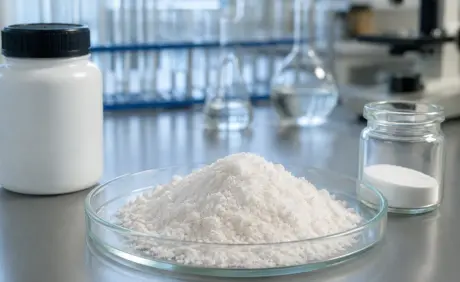
From a production point of view, it is usually supplied as a crystalline powder. It looks simple, but in industrial use this “simple form” is actually one of the reasons it is still widely accepted—it behaves predictably during blending and storage when conditions are properly controlled.
Based on typical industrial control standards, Sulfadimidine is usually managed within the following range:
- Assay: 99.0%–101.0%
- Moisture: ≤0.5%
- Heavy metals: controlled at ppm level
- Appearance: white to slightly off-white crystalline powder
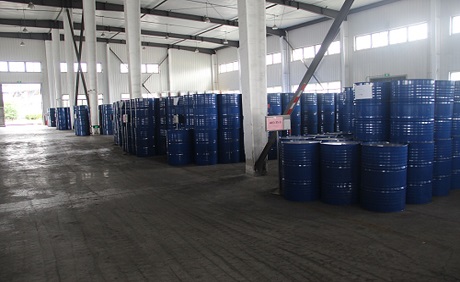
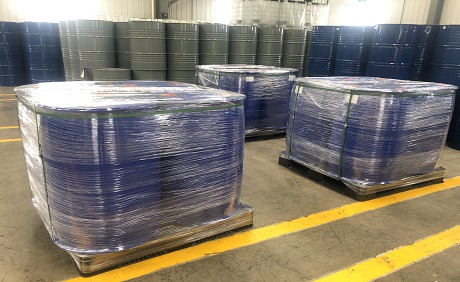
- Packaging: 25kg sealed industrial drum
These parameters might look standard on paper, but in real production lines, even small deviations in moisture or purity can slightly affect blending smoothness, especially in large-scale batches.
Sulfadimidine vs Sulfadimidine Sodium: Functional Formulation Differences
Although both compounds originate from the same active structure, their industrial behavior differs significantly due to salt formation. The main difference is not theoretical chemistry, but how they actually perform when put into water-based or solid systems.
Sulfadimidine (Base Form)
Sulfadimidine in its base form does not dissolve easily in water. Because of this, it is mainly used as:
- A raw API for solid dosage production
- A material that goes through further formulation processing
- A base input for non-aqueous systems
In practical factory settings, this means it usually requires extra processing steps when used in liquid-related applications, especially when uniform dispersion is needed.
Sulfadimidine Sodium (Water-Soluble Form)
Sulfadimidine Sodium (CAS No. 1981-58-4) is the sodium salt derivative of Sulfadimidine. After salt conversion, its solubility in water increases significantly.
In practical production systems, this leads to:
- Faster dissolution in aqueous environments
- More stable dispersion in liquid formulations
- Reduced pre-processing requirements in mixing systems
Typical specifications include:
- Assay: 99.0%–101.0%
- pH: alkaline range (formulation dependent)
- Solubility: freely soluble in water
- Packaging: 25kg sealed drum
In real industrial usage, this form is often selected for liquid veterinary dosage systems where processing efficiency and uniformity are required.
Technical Specification Comparison for Procurement Decision
| Item | Sulfadimidine | Sulfadimidine Sodium |
| CAS No. | 57-68-1 | 1981-58-4 |
| Chemical Form | Free base | Sodium salt |
| Solubility in Water | Very low | Freely soluble |
| Primary Use | Solid dosage API | Liquid veterinary formulations |
| Processing Requirement | Higher dispersion effort | Direct dissolution possible |
| Manufacturing Efficiency | Medium | High (liquid systems) |
| Storage Condition | Dry, sealed, light-protected | Dry, sealed, light-protected |
This comparison reflects industrial behavior rather than theoretical chemistry differences. In procurement decisions, this table is often more important than molecular explanations.
Veterinary Application Scenarios in Industrial Production Systems
In veterinary manufacturing environments, Sulfadimidine is typically used in long-established antibacterial treatment systems under veterinary supervision and regulatory control.
Application scenarios are usually divided based on formulation type:
- Solid dosage veterinary products: typically use Sulfadimidine base form
- Injectable or aqueous formulations: prefer Sulfadimidine Sodium
- Drinking water medication systems: generally require water-soluble derivatives for processing efficiency
However, actual use depends on veterinary regulation, residue control requirements, and regional approval frameworks. In many markets, sulfonamide usage is subject to strict compliance rules, particularly in food-producing animals.
Supplier Evaluation Criteria in Sulfadimidine Bulk Procurement
In bulk API procurement, supplier selection is not based solely on chemical grade. Buyers typically evaluate suppliers as long-term production partners within a continuous supply chain.
Key evaluation factors include:
- Batch-to-batch assay stability across production cycles
- COA consistency and traceability of test data
- Availability of export documentation (MSDS, TDS, shipping compliance files)
- Packaging integrity during long-distance transport
- Moisture control and storage stability during logistics
- Production scalability for long-term supply contracts
In industrial sourcing practice, inconsistency in any of these areas can disrupt downstream pharmaceutical production, making supplier reliability a core decision factor.
Quality Control and Export Packaging Requirements
Quality control for Sulfadimidine begins before final testing. It is integrated into multiple stages of production, including crystallization, drying, and packaging.
For Sulfadimidine base form, key quality control factors include:
- Purity stability during crystallization
- Moisture control during drying
- Particle uniformity for blending performance
For Sulfadimidine Sodium, additional attention is given to:
- Solubility behavior consistency
- Solution stability in aqueous systems
- pH stability depending on formulation design
From the logistics point of view, it is necessary that both the products be shipped in airtight industrial packaging to avoid absorption of moisture and ensure chemical stability during shipping over long distances. This consideration applies when exporting these products due to varied environmental conditions in transit.
Procurement Decision Framework: How Buyers Choose Between the Two Forms
In real procurement environments, the decision between Sulfadimidine and Sulfadimidine Sodium is not treated as a chemical preference but as a production alignment issue.
A simplified decision logic is:
- If the final product is a solid dosage form → Sulfadimidine base is preferred
- If the final product is a liquid veterinary formulation → Sulfadimidine Sodium is more suitable
- If formulation efficiency is critical → sodium form reduces processing complexity
- If cost optimization in solid systems is priority → base form remains standard choice
There is no universal superior option. The correct selection depends entirely on formulation design and production requirements.
Conclusion
Sulfadimidine and Sulfadimidine Sodium are structurally related veterinary APIs but serve different roles in industrial manufacturing systems. One is optimized for solid dosage applications, while the other is designed for aqueous formulation environments where solubility is a key factor.
In procurement practice, the decision is driven less by chemical differences and more by production compatibility, regulatory requirements, and long-term supply stability.
SPS Chemical, operated by Henan Springsea Chemical Products Co.,Ltd., supplies both forms in bulk industrial packaging designed for veterinary pharmaceutical and feed manufacturing systems. For technical documentation, specification confirmation, and procurement planning, direct supplier coordination remains an essential step in industrial sourcing workflows.
FAQ
Q1: What is the main quality risk in bulk Sulfadimidine procurement?
Batch inconsistency in assay or moisture levels, which can affect formulation stability in large-scale production.
Q2: How do buyers verify a reliable Sulfadimidine supplier?
They usually check COA consistency, impurity control, and completeness of export documentation across shipments.
Q3: What happens if Sulfadimidine Sodium is used in the wrong system?
It may increase cost or process steps, since its solubility advantage is not fully utilized in solid formulations.
Q4: Why do some suppliers fail to maintain stable supply?
Most issues come from inconsistent raw materials or weak process control in drying and packaging stages.
Q5: What is the key import concern for international buyers?
Regulatory compliance and documentation accuracy are critical to avoid customs delays.